Monday, 26 May 2014

A History of the World Cup in Mascots


World Cup fever is taking hold. The sticker album is being filled up. Newspapers are being scoured for squad news. Previews are being read mercilessly and videos of previous World Cups being watched religiously.

32 teams will compete in Brazil for the right to call themselves World Champions and be added to the list of World Cup legends. Names like Pele, Cruyff, Maradona and Ronaldo have become synonymous with the World Cup competition.

There is another list however that receives less fanfare though they have been a mainstay of the World Cup for nearly fifty years. They are the mascots. Sometimes loved, sometimes loathed or ridiculed. Invented by the English. Here follows a list of all the World Cup mascots from 1966 to the present day.

1966 England – World Cup Willie


The original and the yardstick by which all future mascots would be judged. When Willie was first created in 1965, a behemoth was unleashed on the world.
A whole new world of merchandising was opened up to the World Cup. Mugs, key-rings, tea towels, t-shirts. You name it, Willie’s face was put on it.
Willie was used to advertise a wide array of products, he was put in comics. He even had his own single, performed by Lonnie Donegan (a Scotsman of all things), reminding us ‘We all know his name.’ Oh, we most certainly do.
Did he inspire his team to glory? All the way to World Cup victory. We all know what happened in the final. Fitting that the first World Cup mascot should be the first World Cup winning mascot in the home of football.

1970 Mexico – Juanito


After the massive success of World Cup Willie it was always going to be a hard act for Mexico to come up with something to match his brilliance. So, what did they come up with? A slightly podgy kid in a sombrero. Underwhelming doesn’t cover it. At least Mexico wouldn’t have to wait too long to get another crack at it.
Did he inspire his team to glory? Not quite. Mexico made it to the quarter finals before being thumped 4-1 by Italy.

1974 West Germany – Tip and Tap


The Germans were doing tippy-tappy football before that was even a thing. Tip and Tap are the first dual mascots. They look rather like an adolescent Laurel and Hardy but unfortunately couldn’t afford a proper size shirt between them. Tip and Tap followed on from Juanito in having an exposed mid-riff. Must be a 70’s thing.
Did they inspire their team to glory? Against all odds, Tip and Tap became the second World Cup winning mascots when West Germany upset the ‘Total Football’ of Holland to win their second World Cup.

1978 Argentina – Gauchito


A boy in a cowboy hat carrying what looks like a riding whip kicking a football. The classic image of Argentina.
There’s not much to say about Gauchito other than to note he was the last human World Cup mascot.
Did he inspire his team to glory? Amid all the usual accusations of skulduggery that plague the Argentinean national team, Argentina did win the 1978 World Cup defeating the unfortunate Dutch 3-1 after extra time.

1982 Spain – Naranjito


It’s an orange. They grow oranges in Spain. So, it’s a Spanish orange with a face. It’s not a reject Letterland character like you thought and is the only fruit to have represented his country in a World Cup.
Did he inspire his team to glory? Not quite. The unusual nature of Spain 82 meant Spain played five games but only won 1 match and were even beaten by Northern Ireland. Arguably, Naranjito is the least successful of all the World Cup mascots.

1986 Mexico – Pique


After a rather lacklustre attempt in 1970 with Juanito, Mexico were given a second attempt in 1986.
This time they came up with a good one when they revealed Pique, a green Mexican bandit chilli complete with comical moustache. I like him.
Did he inspire his team to glory? Probably Mexico’s best performance in a World Cup when they got to the quarter finals but were eliminated on penalties by (who else?) West Germany. A few more chillies in their diet and who knows what could have happened.

1990 Italy – Ciao


Think of weird mascots and this is the one that comes most immediately to mind. Ciao is not a mascot. Ciao is the early sketches of a mascot but then the designer thought to himself ‘I can’t be arsed with this, I’ve got a risotto to cook. This will do.’
Maybe it’s apt that what is regarded as the most lacklustre World Cup tournament should have the most half-cocked mascot.
Did ‘it’ inspire its team to glory? While opposition teams were struggling to understand what Ciao was meant to be, Italy roared to the semi-finals but unfortunately Argentina recovered their senses in time to eliminate them on penalties. Italy would go on to claim third-place however after beating England.

1994 USA – Stryker


For the first World Cup to be held in a country that had always regarded ‘soccer’ with an air of suspicion, USA 94 sold itself on the image of a character who looked like he was straight out of a Hanna-Barbera cartoon.
The first animal mascot since Willie, it is perhaps not surprising it took until the World Cup hit America for someone to truly re-realise the marketing potential of a mascot. The on field action might have sold the game to the public at large but Stryker sold it to the kids.
Did he inspire his team to glory? Expectations weren’t high for the USA but qualifying from a tough group and a narrow defeat by Brazil in the second round weren’t a bad return for the old dog.

1998 France – Footix


Footix is a French Cock.
Childish giggles out of the way, Footix is probably the best mascot since World Cup Willie from what some would consider to be the best ever World Cup tournament.
Stryker laid the ground work four years earlier, Footix perfected it. Footix put his face on everything and was a massive success for the French marketing team.
Did he inspire his team to glory? Footix became the fourth World Cup winning mascot when France beat Brazil 3-0 in the final. Rumours that Footix nobbled Ronaldo before the final are vigorously denied.

2002 Japan & South Korea – The Spheriks (Ato, Kaz and Nik)


One World Cup. Two hosts. Three mascots.
For the first World Cup in Asia, the mascots chosen were to invoke images of the manga/anime style that the region has become known.
Unfortunately, they look more like Pokemon rejects. The tournament was a great success. The mascots, not so much.
Did they inspire their teams to glory? The Spheriks, as they are collectively known, were only able to take Japan to the second round but had more success with South Korea who made it to the semi-finals and a creditable fourth place. Ato, I choose you!

Germany 2006 – Goleo VI


Germany were given another crack at a World Cup mascot, so what did they do? They tried to steal Willie and make him German. After all, that is the German way.
The interesting thing about Goleo is the ‘VI’ in his name, which begs the question: what happened to the other five?
Did he inspire his team to glory? An imitator will never be as good as the original and so it proved as Germany fell at the semi-final stage. Third place isn’t bad but it’s no World Cup Willie success.

South Africa 2010 – Zakumi


Zakumi has a special status, as indeed does the 2010 World Cup. For this wasn’t just the South African World Cup, this was the World Cup for all of Africa.
So it was that the green haired Leopard had the hopes of a whole continent heaped upon him.
Did he inspire his team(s) to glory? Depends how you look at it. If you take him as solely representing South Africa, he would be an abject failure as they became the first hosts to exit in the first round. But if you take him as representing all of Africa, you’d point to Ghana who were robbed of a place in the semi-finals by that great model of sportsmanship, Luis Suarez.

Brazil 2014 – Fuleco


I know little about armadillos. There, I said it. Mock me with your superior armadillo knowledge if you must but that’s the truth of it.
I remember an old Harry Enfield Dime bar advert and I have found out recently they are an endangered species but that’s about it.
Fuleco reminds me a little of Sonic the Hedgehog with his ‘tude. And that’s cool.
 Will he inspire his team to glory? It remains to be seen but signs are good with Brazil’s impressive victory in last year’s Confederations Cup and maybe Fuleco will add his name to the list of World Cup winning mascots rather than being relegated to the dustbins of history along with Juanito, Gauchito and Ciao.

A special mention should be given to Bulldog Bobby. He wasn’t a mascot for a whole World Cup but he was the mascot for England’s 1982 World Cup side who went out in the second group phase.

Always finish on a song, so here’s World Cup Willy:


Wednesday, 14 May 2014


Having done a couple video game movie reviews, now for something similar but different. A movie about video games.

The Wizard is not a movie however. The Wizard is a 90 minute Nintendo commercial showing off all their wares. The Nintendo Entertainment System (NES), their games, peripherals (we’ll get to one in particular later on), magazines and the Nintendo hotline (a gaming advice phone number) are all present. Nintendo were going to use this opportunity to the fullest.

Movies about people playing video games are a rarity and probably with good reason. Video games are an insular activity generally played at home, usually alone.  In movie terms, getting the last hit on the final boss is not as cinematic as the spiralling pass for the match winning touchdown.
Nintendo had a trick up their sleeve though, for 1990 was the year they held the Nintendo World Championships at Universal Studios in California (the films other major sponsor). As you would imagine, the aim was to find the world’s best Nintendo player (who lived in America). Special Nintendo World Championship NES game cartridges were given to some of the contestants who took part. These cartridges are extremely valuable for retro collectors and have sold for as much as $100,000.


Compared to its rivals in the video game industry, Nintendo has a far cuddlier, family friendly image. Cutesy even. With that in mind, The Wizard starts with 8 year old Jimmy who has been put in a mental institution following the death of his twin sister who drowned two years previously and his parents have now divorced. The only word he seems able to say is ‘California’.


His elder brother, Corey (played by Fred Savage from The Wonder Years) busts him out of the institution and they plan to run away. Unfortunately, they don’t have any money and it’s at the bus station where they meet Hayley, another young runaway. They discover Jimmy’s natural talent for video games and Hayley tells them about the ‘Video Games Armageddon’ event taking place in, you guessed it…California! What an amazing coincidence.


Jimmy’s mum hires a bounty hunter to find the boys and bring them back. The father (Beau Bridges) isn’t happy about this and sets off with his other son, Nick (Christian Slater) to find them himself. As you would for any long road trip, Nick remembers to pack his NES and all his games. This leads to the father-son bonding over video games we’ve all experienced in our lives.
They also get into comedic scrapes with the bounty hunter as they try to sabotage the others attempts to find the boys. Dog the Bounty Hunter he ain’t.


Meanwhile, the children are making their way across the country earning money by beating truckers and businessmen at various arcade machine games (Nintendo ones obviously, sorry Sega). Then they meet Lucas leading to what is possibly the most remembered thing in the whole movie: the Power Glove. And it’s bad. So bad.


Many people think motion control is a new innovation but actually Nintendo were developing it back in the 80’s. The Wizard might be the only place you ever see the power glove actually work but it shows even back then Nintendo were innovating with new things.
After a demonstration of Lucas’s skills with the glove, the trio realise they might have bitten off more they can chew. And Lucas likes his Power Glove, he really likes it.

Anyway, after a few mishaps including a near escape from the bounty hunter, the kids eventually make it to California and enter the tournament. And who should they see there but Lucas, unfortunately he is sans glove.
After playing through some Nintendo games, Jimmy wins through to the final. Before that takes place there is time for a quick tour of Universal Studios courtesy of being chased by the bounty hunter. Jimmy eventually makes it back in time for the final where he will be facing, of course, Lucas. There’s a girl there as well, who may well have had a name but she obviously wasn’t going to win so she doesn’t really need one.


There’s a twist though, they’ll be playing a new game. One never seen before. Not just any game though, this is Super Mario Bros. 3. This was actually quite a big deal. Nintendo had been very tight-lipped about their next Mario game and being the pre-internet age, this was as much a surprise for the audience as it was for the characters in the film. And there it was, Mario in all his raccoon-suit wearing glory.

All of Jimmy’s family, including his mother, have now arrived in the audience and are there to shout out advice on a game they’ve never seen before. Which is probably the most accurate thing in the whole film.
In the end, Jimmy comes from behind to beat Lucas and win the $50,000 prize. Lucas was playing with a handicap though, using those antiquated controllers. If he’d had his Power Glove he blatantly would have won.

Jimmy then goes to celebrate with his now reunited family. Nintendo, bringing broken families back together for 25 years.

The Wizard isn’t an especially bad movie, it’s very much your standard family film of the period but the proliferation of Nintendo products throughout is a distraction. Product placement in films is one thing but The Wizard takes it to another level.
It’s also interesting to see for the then rising stars of Christian Slater and Fred Savage. Though if you ever saw an episode of The Wonder Years, you know what you’re getting from Savage.


Now I’m going to look on ebay for a Power Glove. It’s so bad.

Trailer:

The Power Glove:


Thursday, 1 May 2014

Bad Movie Appreciation Society: Super Mario Bros.


The recent death of Bob Hoskins got me thinking about some of the great films he’s been in and how I should write an article about one of them as a tribute. Then I wrote one about Super Mario Bros. instead.

Bob Hoskins is perhaps not the most well-known actor but he was still a fine one. He does a great job in Hook (along with Dustin Hoffman in an otherwise mediocre flick) and a does a great turn as a mobster in The Long Good Friday. There’s also a film he was in with an animated rabbit.
Unfortunately for him though, this blog is about bad movies so…

Everyone knows and loves Mario don’t they? The most recognisable face in all of video games, Mario has been around over 30 years, first appearing in 1981 arcade game, Donkey Kong, then known simply as ‘Jumpman.’ Two years later, now with his Mario moniker, he now had his own game titled Mario Bros appearing alongside his brother Luigi. When the Nintendo Entertainment System (NES) was released in America in 1985, Super Mario Bros was one of the pack in titles. The rest as they say is history.

Mario has been the face of Nintendo and they have certainly milked every nickel and dime they can get from him. As well as his core platform games, there’s Mario Kart, Mario Tennis, Dr. Mario (a puzzle game), Mario Strikers, Mario Paint and about 1000 others. Mario is so prominent in Nintendo video games you sometimes have to wonder if he’s only been put in as Nintendo don’t think a game will sell without him.


So perhaps it was inevitable, that eventually someone in Hollywood would want a piece of the Mario pie. And in 1993, they eventually did.
It’s generally accepted that video games to movies don’t work but to be fair to the producers on this one, there weren’t many examples around at the time to really make that judgement. Plus Mario had a popular TV series on at the time, The Super Mario Bros. Super Show, combining cartoon and live action segments that is still fondly remembered to this day.

Mario was ripe to sell to family audiences with its lovable characters, great music and bright, vivid world’s. So the obvious thing to do is remove all those elements on the film.


The plot of the movie is that there’s an alternate dimension where dinosaurs did not die but instead evolved into people not too dissimilar to humans just with dinosaur rather than mammal dna. King Koopa (played by Dennis Hopper. Koopa is actually the name of the villain in the TV series, in the games he’s known as Bowser) wants to take over both dimensions by merging them using a portal two plumbers from Brooklyn, Mario (Hoskins) and Luigi (John Leguizamo) , accidentally fall through. His plan is then to devolve all the humans on earth back to their primate state using his devolving ray.
Then there’s a sub-plot with Daisy, who is actually a princess of the alternate dimension but has no memory of this as she was sent through the portal by her mother to keep her safe when Koopa seized power and turned her father into a giant fungus. And as every Mario fan knows, when Daisy’s around she’s going to get kidnapped and it’s up to the brothers to rescue her.


 The alternate dimension is your standard dystopian vision right down to the seedy nightclub. Obviously, it’s patrolled by Koopa’s personal police force, the Koopa Troopers. Amongst these are the Goombas. Not the angry little mushroom things from the game, these are giant hulking lizard creatures but with ridiculously tiny heads. And when Mario Bros. are trapped in an elevator with these behemoths, what’s the best way to escape them? Why, make them dance of course.

Mario and Luigi are helped in their quest to save the world by the fungus that grows throughout the world, that we come to assume is controlled by Daisy’s father. It’s always been a curious thing in the Mario world that magic mushrooms are always a positive thing. It’s almost amazing that more of a fuss hasn’t been kicked up about it.

And if a story like that doesn’t win an Oscar, there is no justice in this world.

There are some good things in this movie, like when we learn Mario’s full name is Mario Mario (obvious really, when you think about it). And then there’s er... and erm…what about…hmm.


To give the last word on this, we turn to the man who inspired this review, the late Bob Hoskins. When asked in an interview three questions, ‘What is the worst film you’ve ever done?’, ‘What is your biggest disappointment?’ and ‘If you could edit your past, what would you change?’ his answer to all three was simply, ‘Super Mario Bros.’


Friday, 18 April 2014

Bad Movie Appreciation Society: Street Fighter


Video games to movies do not have a great history it’s fair to say.
In the past, this may have been down to the simplistic nature of video games. In the 90’s, most games were still based around the idea of getting from one side of the screen to the other with the background being the only real difference.
In more modern times, where story has become more important and is often played out over 7-10 hours it could be said games are now too complex to be broken down into 90 minute popcorn movies.
Either way, video games have been responsible for some real stinkers of movies. Tomb Raider, Mortal Kombat, Super Mario Bros (we’ll get to that one another time) but perhaps the worst offender is 1994’s, Street Fighter: The Movie.

This was based off the arcade game Street Fighter 2, one of the most insanely successful video games of all time. If you had any kind of system capable of playing video games, you had Street Fighter 2. There was even a version available on the ZX Spectrum.
If you were living under a rock in 1992, SF2 was a one-on-one fighting game reliant on its amazing speed, special moves and combo’s. This was no button masher though, strategy was crucial to success.
There were eight different characters to choose from (or 12 or 16 depending which version you were playing) all with their own unique skillsets and attributes (well, apart from Ryu and Ken who were identical). Everyone had their own favourite character to play as and hours were spent mastering their move sets (mine was Guile, “Sonic Boom”).

Anything that becomes vaguely successful will inevitably catch Hollywood’s interest and so it was the case here. To cash in on this fighting game craze, in the summer of 1994 Street Fighter: The Movie was unleashed on the world.


I don’t really know where to start with this one. Oh wait, yes I do. Jean-Claude Van Damme. The seal of shit on any movie he appears in. It’s not entirely his fault but no movie has ever benefitted from having him in it (and yes, I do include Universal Soldier in that). In this one, he’s very much his standard self. He plays the lead role in the film Lieutenant Guile, and he has his usual array of martial arts kicks and mumbled lines. He’s never been able to gurn like Arnie does but he gives it a good go.

A lot of the characters have their biographies re-written for this movie. Ryu and Ken, trained warriors from birth are now a pair of travelling con-men. Dhalsim, in the game a yoga mystic is now a geneticist responsible for the creation of Blanka, who himself was a beast from the jungles of Brazil in the game. Balrog and E. Honda, former world boxing and sumo champions respectively, are Chun Li’s sidekicks in this movie (shameless plug: Chun Li is played by Ming-Na Wen who can currently be seen tearing it up as Mae in Marvel: Agents of Shield).


The best thing in this film though is Raul Julia as M.Bison. Sadly, this was to be his last role as he died from a stroke soon after filming was complete. With all the shit going on around him, Julia is brilliant as the psychotically, unhinged wannabe dictator. While everyone else around him is going over-the-top with their roles, Julia is very much understated in his providing an excellent counter-point. And he gets some great lines, for example consider this exchange:

Chun Li: It was twenty years ago. You hadn't promoted yourself to general yet. You were just a petty drug lord. Huh! You and your gang of murderers gathered your small ounce of courage to raid across the border for food... weapons...
Chun Li: ... hmph. Slave labor. My father was the village magistrate. A simple man with a simple code: justice. He gathered the few people that he could to stand against you.
(laughs)
Chun Li: You and your bullies were driven back by farmers with pitchforks! My father saved his village at the cost of his own life. You had him shot as you ran away! A hero... at a thousand paces.
Bison: I'm sorry. I don't remember any of it.
Chun Li: You don't remember?
Bison: For you, the day Bison graced your village was the most important day of your life. But for me, it was Tuesday.

That’s a brilliant movie villain line, it’s just a shame it had to come in this one but Julia is pitch perfect in the way he delivers it.

Sadly, that’s about the only bright-spot in this otherwise shit-fest of a movie. The story is nothing special, M.Bison has a grand plan to take over the world and Guile goes in to stop him, all climaxing in a big fight between hero and villain at the end. There are side-stories as well but nothing too interesting: Ken and Ryu try to pull a scam on crime boss Sagat, Chun-Li seeks revenge for death of her father.
Of course, being a game based on one-on-one fighting there are going to be a lot of fights in this movie. There are some good choreographed ones such as the rivalry that emerges between Ryu and the psychotic Vega. There is a fight between E.Honda and Zangief that is played for laughs when the two behemoths are fighting in a model of a city complete with Godzilla sound effects.

Speaking of Zangief, it has to be said he does provide some good comic relief throughout the movie, such as when he and the rest of the villains are watching a monitor showing a truck filled with explosives rolling towards them and he shouts out, ‘Quick! Change the channel!’


Perhaps it was an uphill task from the start. Even in the world of video game movies, making a good film out of a game that is essentially just random people fighting each other is no easy task. In addition to that, you have to find ways to bring in all the characters to keep the fans happy.
Not easy, but it doesn’t have to be as terrible as this. The Street Fighter 2 anime movie for example, is actually really good and had many of the same constraints as the live-action version.


Perhaps the strangest facet of the Street Fighter movie saga is that a game was actually spawned from this. So, it went from video game to movie back to video game. It wasn’t very good.

Trailer:


Thursday, 13 March 2014

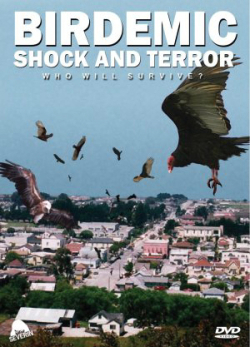
Bad Movie Appreciation Society, #2: Birdemic


This film is amazing. No mere words can explain how brilliantly bad this movie is but I shall endeavour to try. Think of Ed Wood at his worst, multiply the badness by a 1000 and you're still a long way off.

Birdemic (or Birdemic: Shock and Terror to give its full title) is a homage to Alfred Hitchcocks The Birds with a heavy environmental message. It was made in 2010 and is directed by James Nguyen. 
Now I have to be fair to Nguyen here, Birdemic was made for next to nothing in film terms (about $10,000) and it does show in the special effects. Nguyen put a lot of effort into making it and promoted the film at the Cannes festival himself.

Bad special effects can be forgiven but there are other things to making a film less dependent on money. Does the story make sense? Does the dialogue flow? Is that really the best actor you could get? Do you even need this character? Or that scene?
At some point or other in the movie, Birdemic fails on all these things.

So, the story such that it is. For the first half hour or so, nothing of note happens. To go back to The Birds, Hitchcock uses the first part of the film to ratchet up the tension, Birdemic wastes it on banality.
We meet a dull software salesman called Rod who meets a girl he used to go to school with (Nathalie) who is now a Victoria's Secret model but still does all her photo shoots at the one-hour photo store.
Then he buys some solar panels for his house and we get a full explanation on what solar panels do (if there's anyone left in the world who doesn't know).
Rod's software company then makes a big money deal. Obviously this means all the employees will now leave that company and it will cease to trade (seriously, that is what happens). So Rod sets up his own solar panel business and makes big deals with his highly persuasive one-slide powerpoint presentations.
Rod, Nathalie and some friends go watch the movie, An Inconvenient Truth. Rod's friend, who was previously of the Jeremy Clarkson school of motoring announces he is now getting a hybrid (do you think there's some sort of theme emerging here?).
Rod and Nathalie then go to a Vietnamese restaurant and are then awkwardly dancing to a rather bizarre song.

Here are some of the lyrics:

A cool summer breeze, making me feel at ease
The barbeque is broilin’ and Uncle Phil is scorin’
Big Momma’s in the kitchen and everybody wishin’
That she’s fixin’ they favorite dish
Just hanging out, hanging out
Hanging out with my family, going to have a paaaaarty


Then out of nowhere, the birds attack. Until this moment you’d probably forgot the name of this movie was Birdemic, so few are the birds you’ve seen in this film.
From here on out you are treated to some of the worst CGI birds you’ve ever seen. Oh, and they make sounds like howlitzers and explode on impact. And spit acid, as birds do.

Our heroes fight off this avian menace with coathangers and go on a road trip to where I’m not exactly sure. Along the way they pick up a couple of children and become surrogate parents. They meet a guy who’s job seems to be to watch a pond and no invasion of killer birds is going to get in the way of that but he still has time to give a lecture on global warming.
They meet a guy who lives in the forest. He explains to them how global warming is raising the number of Spruce Bark Beetles that are killing all our trees (damn them!) and a forest fire spontaneously bursts out.
They end up on a beach where Rod discovers fishermen have been wasting their time for years using bait to catch fish, all you need is the rod. The evil birds then show up but this time are chased away by ‘good’ birds whose existence was hitherto not mentioned.
Rod, Nathalie and their new adopted kids then watch as the birds fly away out to sea. For a long time. A really long time.


Let’s get technical. The actors are abysmal, probably just dragged in off the street as Nguyen went along. The script is awful. Having an environmental message is all well and good but delivering it in such a ham-fisted manner with characters shoe-horned in to give overlong lectures is not the way to go about it.
Even going to basics such as camera angle and framing are done poorly. Background music is too loud, drowning out the character dialogue (though arguably that’s a good thing).

I want to give this balance, and point out something good about Birdemic but there isn’t anything. It’s just bad, bad, bad.

Reading it through you may be under the impression I don’t like Birdemic but that couldn’t be further from the truth. This level of ineptitude is a marvel to behold. It’s awesome in its awfulness.
And apparently, there’s a Birdemic 2…


Monday, 10 March 2014

Whatever happened to Alex Kidd?


Back in the late 80's, Mario ruled the video game world. He had replaced Pac-Man as the number one guy in video games, no magic cherry in the world was big enough to save the yellow pizza guy. But there were those who would challenge the Italian magic mushroom-eating plumbers dominance with varying degrees of success. One such person was Alex Kidd.

Kidd made his big debut in 1986 in Alex Kidd in Miracle World. He was a smash hit. People loved his look with his massive oversized head, Monkees-esque haircut and penchant for the game 'Rock, Paper, Scissors' to solve conflicts. He quickly followed this up with Alex Kidd: The Lost Stars solidifying his fan base. He wasn't Mario yet but Alex Kidd's star was rising.

Behind the scenes however, Kidd wasn't happy and he wanted to move himself in different artistic directions. In 1987, he revealed his passion for BMX riding in Alex Kidd BMX Trial. Then he launched his most daring project to date, Alex Kidd: High-Tech World.
It was a radical departure from his usual style. Rather than having Kidd battle birds and strange octopus men, High-Tech World centred around a map that had been mysteriously scattered around Kidd's home and his attempts to piece the puzzle together. It proved a catastrophe, perhaps being too avant-garde for Alex Kidd's more casual fan base.

In 1989, Kidd returned to his roots for Alex Kidd in the Enchanted Castle bringing all his rock, paper, scissors tricks with him. Though the reviews were decent the magic just wasn't there anymore.

The pressure was on for Kidd for his next game, Alex Kidd in Shinobi World. Rumours were circulating around Sega Studios that the once rising star was on his way out and might be replaced by an up and coming speedy blue hedgehog. Shinobi World was released in 1990 but the world just didn't care about Alex Kidd anymore. Kidd was soon after released by Sega.

Kidd fell into drug addiction and would challenge random strangers to a game of rock, paper, scissors for money to feed his habit. This situation would reach its zenith in 1994 when Kidd was arrested for indecent exposure after making his own addition to the rock,paper scissors world he called 'the rocket.' As he was being led away by police, witnesses heard Kidd screaming 'the paper wraps the rock but the rock bursts through the paper!'

Kidd would then spend the next two years in rehab. Since coming out he has worked steadily on the games convention circuit, regaling old fans with his stories of what it was like being a video game star.

By the mid-noughties, Kidd had patched up his differences with Sega and agreed to make cameo's in their games such as Sonic and Sega All-Stars Racing.

Today, Kidd makes visits to schools in order to teach children about the risks of drug and rock, paper, scissors. Kidd is proud to say he hasn't challenged anyone to a game of rock, paper, scissors in 15 years.

Thursday, 6 March 2014

Bad Movie Appreciation Society: Plan 9 from Outer Space (or how I learned to stop worrying and love shitty movies)

Bad Movie Appreciation Society: Plan 9 from Outer Space


Following on from the previous article about ‘so bad its good’ movies, a good place to start when looking at their history would be the most notorious one of all, referred to as the Citizen Kane of bad movies: Plan 9 from Outer Space.

So where to start with this monstrosity? Well, some background first.
Plan 9 was released in 1959, directed by Ed Wood. In 1980, two years after his death, Wood was given The Golden Turkey award for being ‘The Worst Director of All Time.’ Prior to Plan 9, Wood had made a few low budget films such as Glen or Glenda  (actually quite a bold movie, exploring transgender issues in what was a very conservative era. Or at least it would have been if weren’t so terribly executed) and Bride of the Monster (not to be confused with The Bride of Frankenstein). All his films were critically panned.

But what did Wood have to work with? 


In his Hollywood career, Wood had collected around him what probably in his mind were a rival to Orson Welle’s Mercury Theatre group. In reality, they were a strange, bizarre group of people.
Firstly, there was Tor Johnson, a Swedish former professional wrestler. Johnson plays Inspector Clay in Plan 9. Clay carries much of the dialogue in the first part of the movie, unfortunately Johnson is near incomprehensible.
Secondly, there is Crisswell who plays the narrator. Before making Plan 9, Crisswell was a TV psychic and he opens the movie with the line:
Greetings, my friend. We are all interested in the future, for that is where you
and I are going to spend the rest of our lives. And remember my friend, future
events such as these will affect you in the future.


And that basically sets the tone for the rest of the movie.
Then there is the impossibly thin-waisted Vampira (you have to see it to believe it), who as you may have guessed from her name dresses up like a vampire (think Morticia from The Addams Family). She had hosted a TV show in America that showed classic horror movies. She was a star name to have in the cast, unfortunately she didn’t want to speak any dialogue.

Wood did have one trump card up his sleeve though, Bela Lugosi. The Hungarian actor was the original screen Dracula in 1931 and to some still the definitive screen version of the character. He had kept a steady stream of work coming in during the 30’s working on Universal horror films often alongside his great rival, Boris Karloff. When Universal pulled the plug on its horror department however, Lugosi was left out on his ear. His European accent was a stumbling block to him getting any major film roles and he fell into heroin addiction. I don’t want to suggest Wood exploited Lugosi but it was evident he needed the money and he was cast in several Ed Wood productions. Sadly for one of cinema’s great screen icons, Plan 9 from Outer Space would be his last feature film as he died during film. As Bela Lugosi wanders off screen in the first few minutes of the film we hear screeching tyres. How appropriate for the rest of the film but sad for Lugosi that one of the first sequences of the film has a car crash.
But Lugosi’s death led to one of the most bizarre things in Plan 9. When trying to think what he could do to replace Lugosi in the film, Wood noticed his wife’s chiropractor bore a striking resemblance to Lugosi, as long as you only saw the top of his face. This led to Wood casting him in the film but he would walk with a cape covering the lower part of his face at all times.

So with a stellar cast like that, what could go wrong?

The plot of Plan 9 from Outer Space centres on an alien invasion of Earth. The aliens (who are human in appearance) want to stop mankind just as they are on the verge of making a discovery that could threaten the rest of the universe due to our hostile and warlike nature. Prior to going into films, Wood had served in the US military in World War Two, so at least on this point Wood could be claiming to speak from a voice of experience.
Rather than using a standard invasion strategy, the aliens activate Plan 9. This plan involves reanimation of the earth’s dead but only three of them. As far as great plans go, it’s pretty ineffective and to wipe out a planet of 6 billion people, the aliens are obviously playing the long game on this. Other than that there is little else to say, other that the humans win when they beat the alien general in a fist-fight that causes enough damage for their suspiciously square looking flying saucer to explode. Yeah, it’s pretty bad.

Production wise is where Wood really shows his expertise. Starting with the most unconvincing looking cockpit in screen history, we are then treated to an array of sparse and dodgy looking sets. Tombstones wobble, actors can be seen waiting for their cues and strings are clearly visible on alien spaceships. Day switches to night back to day between shots making it near impossible to tell how much time is supposed to have passed.

Yet all that could be forgiven if the story and dialogue were any good. Audiences are quite understanding that special effects might not be up to scratch, we are aware of the financial constraints film makers often find themselves under. But the script is the element the director does have control over and in Plan 9 from Outer Space the script is awful.

For all its failings, it’s hard not to love Plan 9 from Outer Space, Ed Wood’s magnum opus. As alluded to in my previous article, the best SBIG movies come from a place of love. An earnest belief by those involved that what they are making is a great movie however misguided that may be.

Plan 9 should be shown to film students and lovers of film everywhere, right alongside Citizen Kane. The latter as an example of how to make a great movie, the former to show how not to make a movie.

Plan 9 from Outer Space trailer:

Some of the previously rejected plans: